

Friulair-logo.png

REACH OUT TO US

We're here to help. Please choose one of the options below to get in touch with us!

Why Precision Cooling Is Essential In Plastics Manufacturing

Precision cooling is one of the most influential variables in plastics manufacturing. Whether the process involves injection molding, extrusion, blow molding, or thermoforming, every stage generates significant heat that must be removed at a controlled rate. Poor temperature stability directly impacts cycle times, product quality, and energy consumption, ultimately affecting profitability.

For manufacturers, cooling is not only about keeping equipment safe—it is about ensuring repeatability, maintaining tight dimensional tolerances, and enabling high‑speed production. When cooling is inconsistent, mold temperatures drift, polymers behave unpredictably, surfaces lose finish quality, and scrap rates rise. In severe cases, a single degree of variation can shut down an entire line.

This is why plastics processors rely on industrial process chillers rather than HVAC-based cooling systems. Industrial chillers operate with narrow temperature tolerances, deliver stable performance 24/7, handle sudden thermal spikes, and integrate intelligent controls required for modern manufacturing lines. They ensure that each part, mold, and production cycle receives the exact cooling performance required—consistently, reliably, and efficiently. 

Plastic blow molding production line requiring controlled cooling for consistent bottle quality.

Application Challenges in Plastics Manufacturing

Plastics manufacturing processes place extreme demands on cooling systems. High thermal loads, fast cycle times, and continuous operation require cooling solutions that go far beyond standard HVAC capabilities. A process chiller for plastic production must ensure precise temperature control, rapid response to load variations, and absolute reliability across all operating conditions.

What Process Chillers For Plastics Must Solve 

A plastics-ready chiller must:

  • Remove heat rapidly and predictably during molding and cooling phases
  • Maintain tight temperature control even under fluctuating loads
  • Support continuous industrial duty cycles
  • Integrate with advanced automation and monitoring systems
  • Offer high energy efficiency over long operating hours

Scrap, Warpage, And Cycle Time: The Cost Of Imprecise Cooling

Imprecise or fluctuating mold temperatures cause longer cycles, increased residual stress, part deformation, and poor dimensional stability. Even small temperature errors lead to defects that drive up scrap and require rework, slowing production and increasing cost per part.

Why Process Chillers Are Non‑Negotiable

Process chillers ensure thermal consistency by providing:

  • Tight temperature precision
  • Rapid response to load changes
  • High reliability in high‑duty environments
  • Continuous operation without performance drop‑off

They are the backbone of stable, high-volume plastic production.

Cooling By Process: Injection Molding, Extrusion, Blow & Thermoforming

Injection Molding Chiller: Fast Heat Extraction For Shorter Cycles

Cooling typically represents over half the total cycle time in injection molding. A dedicated chiller accelerates mold cooling while maintaining target mold temperatures to ensure part stability. With precise cooling, processors can achieve faster cycles, improved surface finish, and reduced shrinkage.

Extrusion & Blown Film: Continuous, Stable Cooling

Extrusion requires consistent cooling along the die, calibrator, and downstream rollers. Process chillers maintain stable temperatures for:

  • Dimensional accuracy
  • Bubble stability in blown film
  • Smooth surfaces and consistent thickness

A chiller ensures the process runs without overheating, even across multi-zone production lines.

Blow Molding & Thermoforming

Blow molding demands powerful cooling to solidify containers rapidly, while thermoforming relies on consistent sheet temperature before forming. Chillers prevent thermal drift that may lead to weak points, uneven wall thickness, or material deformation.

Separation

From Energy Cost To TCO: Where Cooling Pays For Itself

SEPR HT, Part‑Load Efficiency, And Free Cooling Strategy

Modern plastics chillers deliver high seasonal efficiency through:

  • High‑efficiency compressors
  • Electronic expansion valves
  • EC fans
  • Microchannel condensers
  • Low‑GWP refrigerants

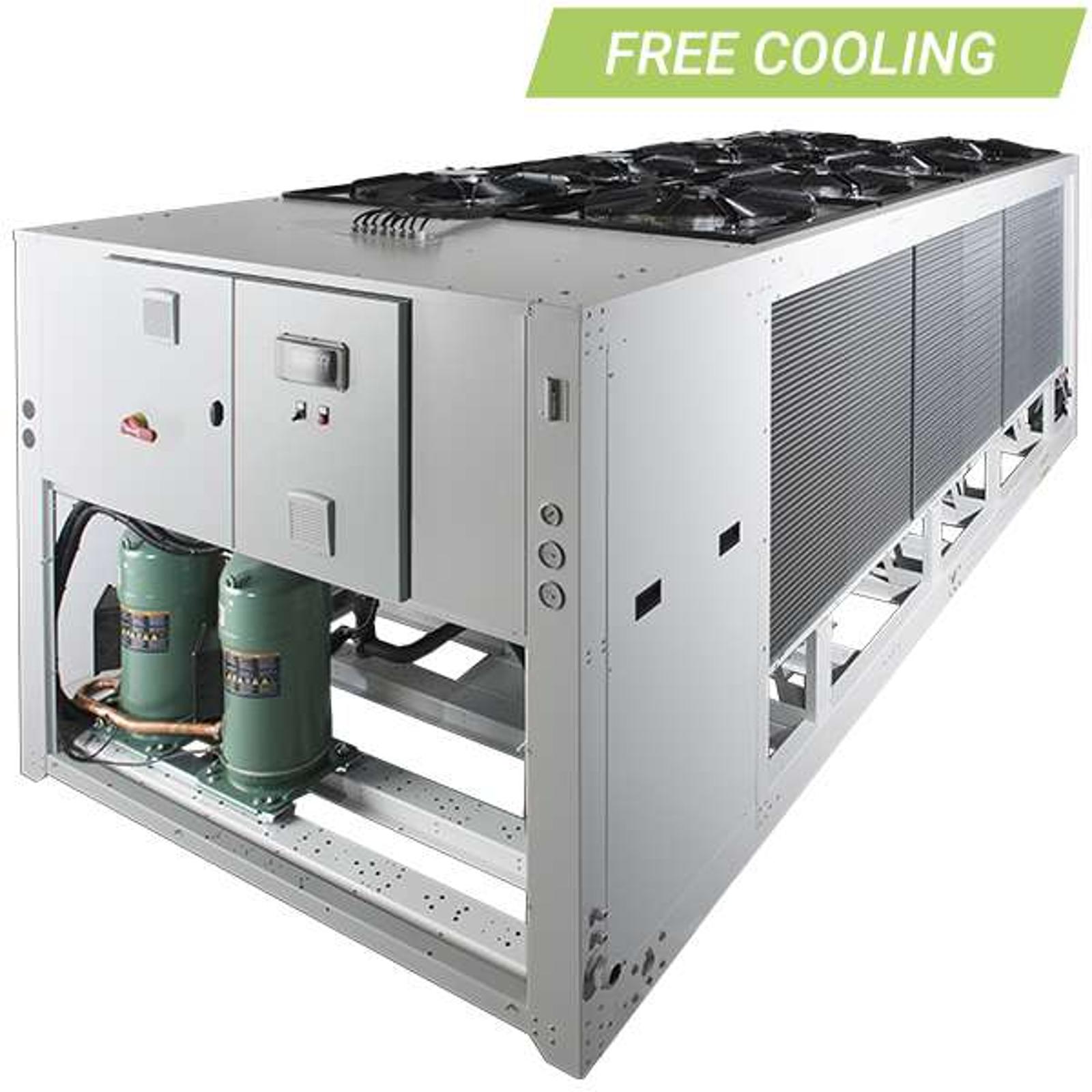
Free Cooling, available via dry coolers, can bypass the compressor in favorable ambient conditions, dramatically reducing electrical consumption—an essential advantage for plants running 24/7.

Maintenance, Uptime, And Spare Parts: Hidden TCO Drivers

High‑quality components, non‑ferrous hydraulic circuits, and easily accessible layouts reduce maintenance time and prevent unexpected downtime. With rugged industrial construction, Friulair chillers minimize service cost and maintain long-term performance stability.

OEE Uplift Through Temperature Stability

Stable cooling enhances overall equipment effectiveness by:

  • Reducing rejects
  • Minimizing unplanned stops
  • Ensuring predictable process behavior
  • Supporting constant cycle times

Cooling consistency directly improves throughput and quality, strengthening profitability.

Friulair Chiller Solutions for Plastic Processing

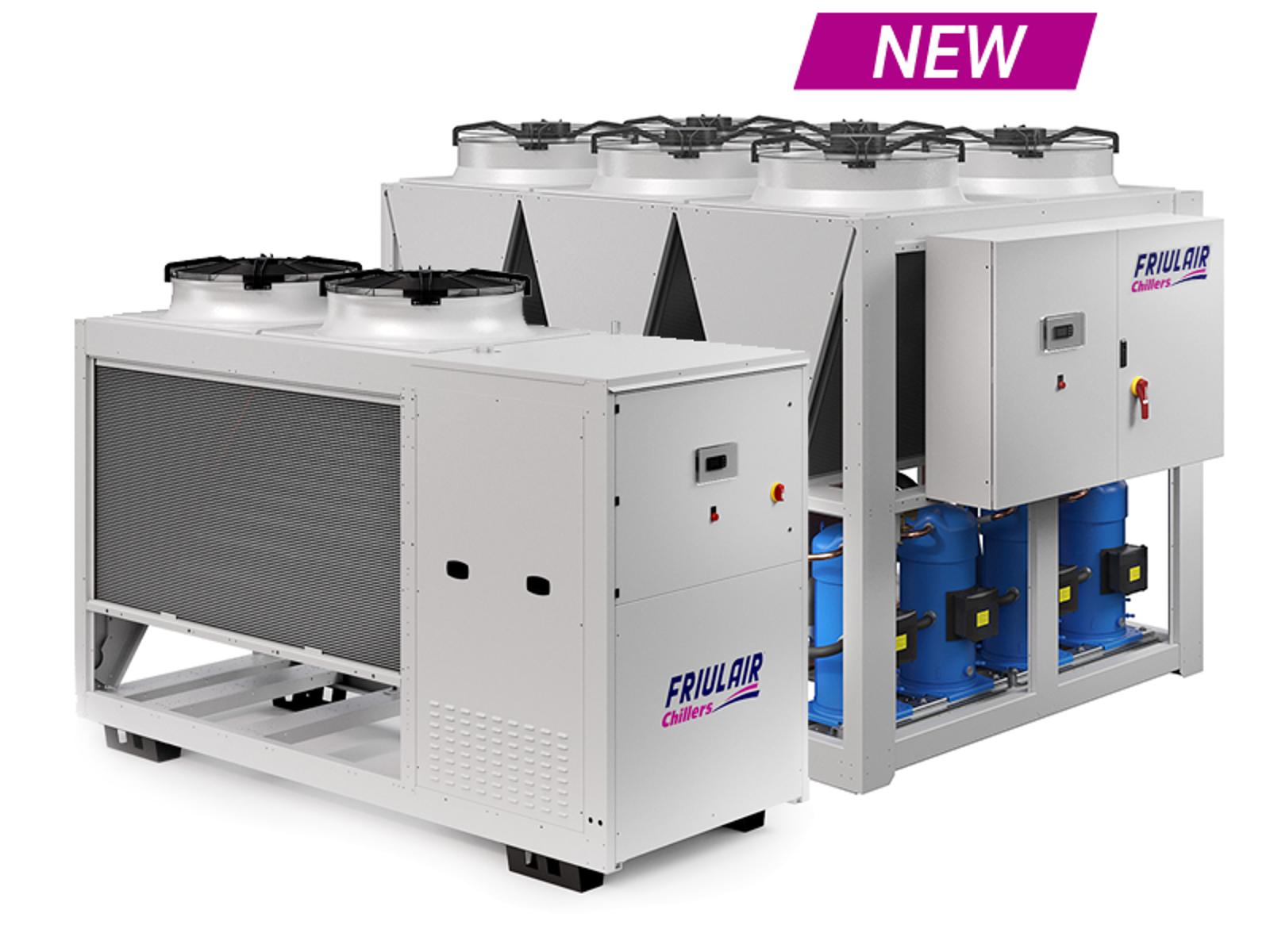
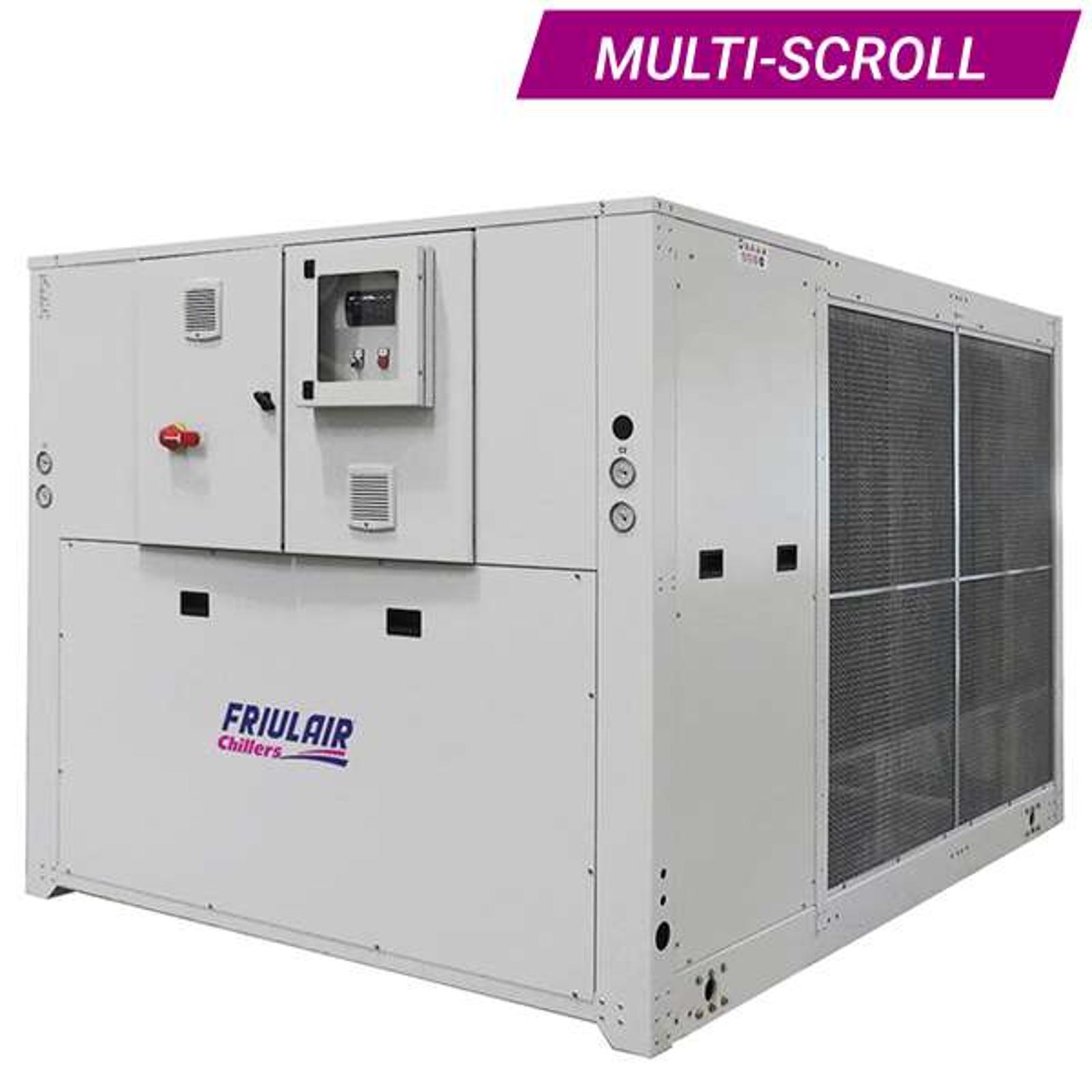
Infinity Cool: High‑Capacity Process Chillers For Large Plastic Lines

INFINITY COOL is engineered for high-demand industrial cooling, making it ideal for large plastic facilities. It combines:

  • Cooling capacities from 20 to 600 kW
  • Low‑GWP R454B refrigerant
  • High efficiency under partial loads
  • Advanced controller with modern industrial protocols
  • Microchannel condensers and EC fans
  • Optional heat recovery systems
  • Outdoor-ready construction

With robust design and intelligent control, INFINITY COOL ensures stable water temperature for extrusion lines, central cooling systems, and multi-machine environments.


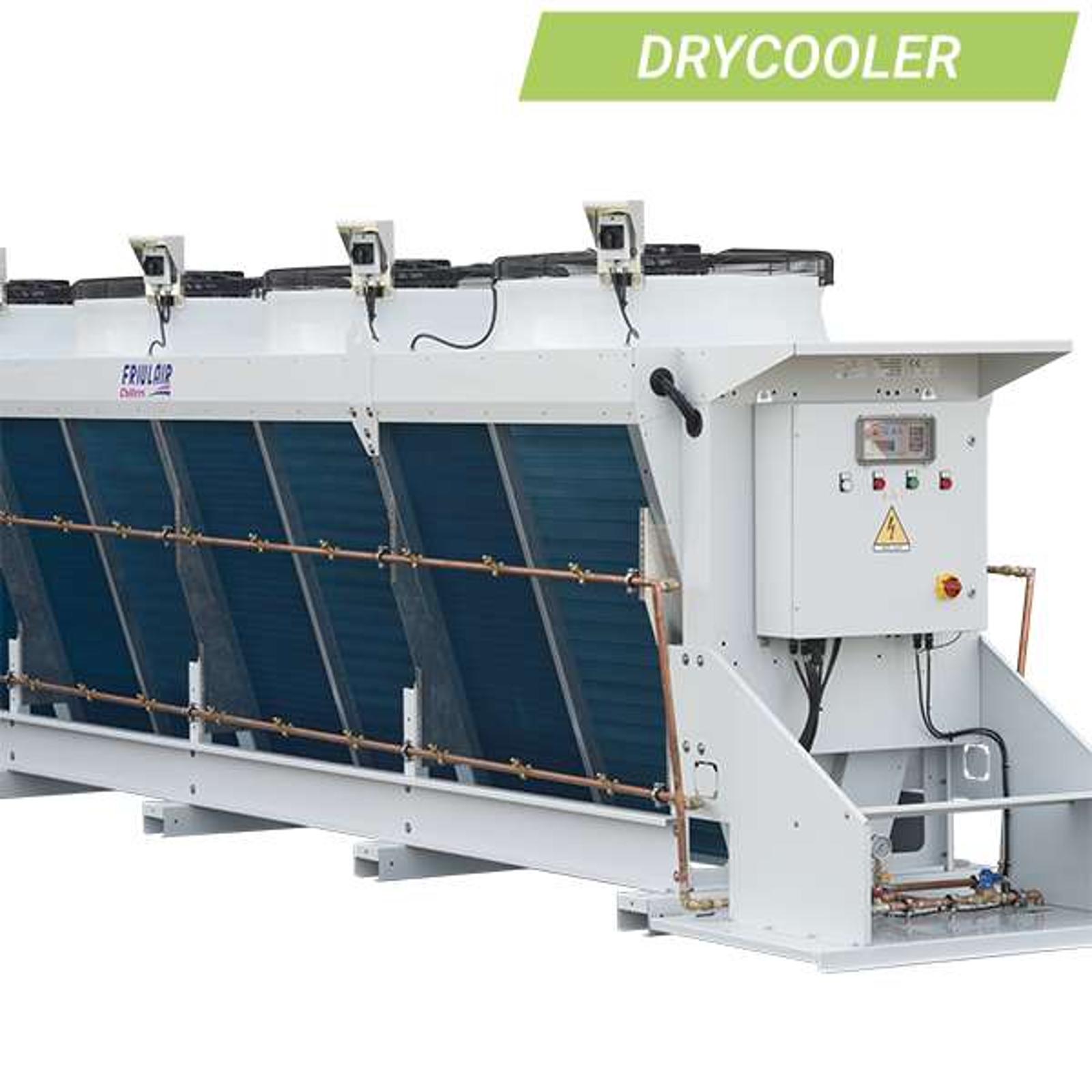
CDC Dry Coolers: Seasonal Free Cooling For Energy Savings

CDC dry coolers provide closed-loop cooling for process fluids and deliver significant energy savings when ambient temperatures allow compressor-free operation. Their advantages include:

  • Horizontal and V-shaped configurations up to 1200 kW
  • Optional adiabatic system for hot climates
  • Low water consumption compared to evaporative towers
  • Compatibility with Free Cooling mode for Friulair chillers
  • Rugged, weather-resistant construction

CDC units are excellent for plants seeking long-term energy optimization.


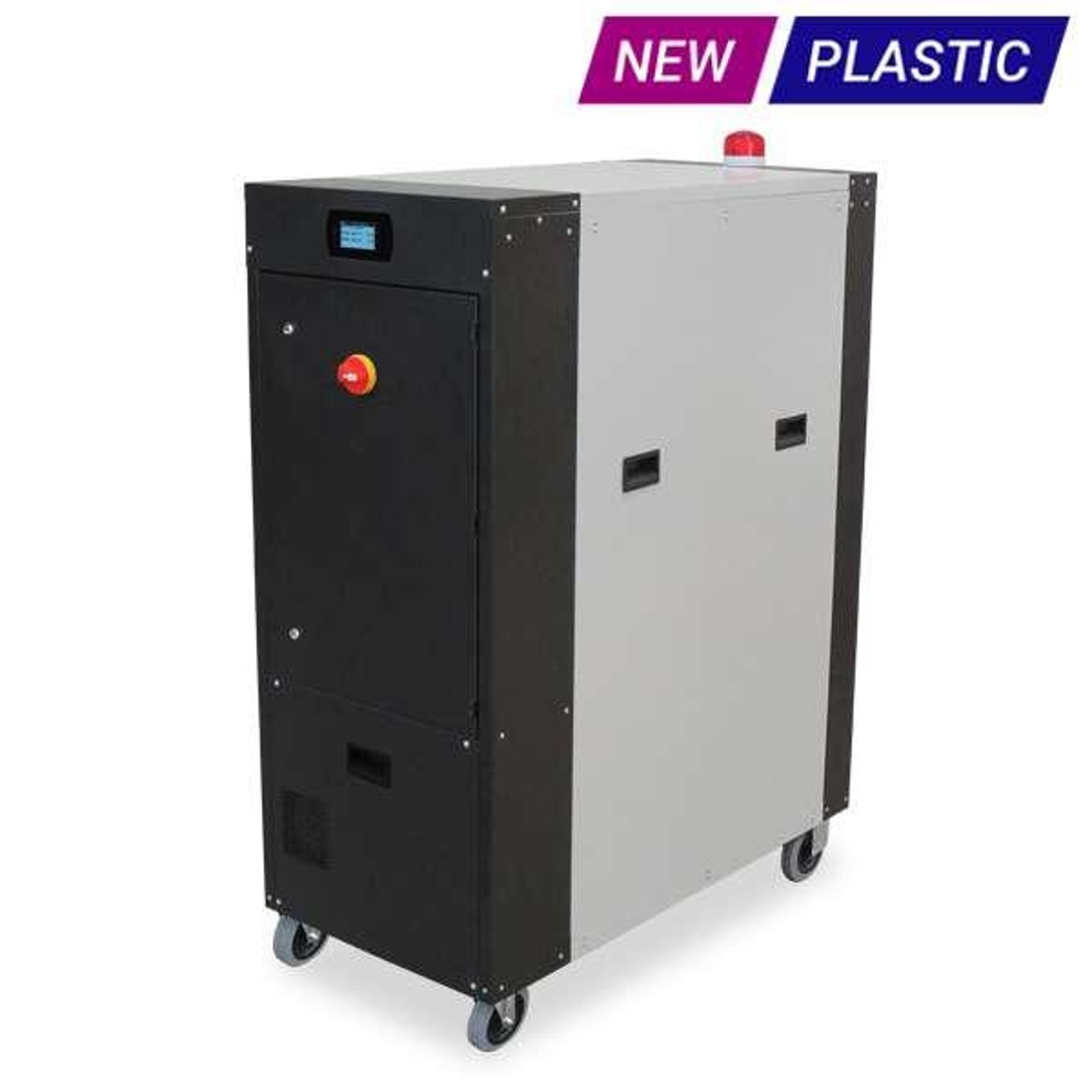
TGR Thermochillers: Precision Mold Temperature Control For Injection Molding

TGR is specifically developed for plastic injection molding. These units integrate:

  • R513A low-GWP refrigerant
  • High‑efficiency scroll compressors
  • Stainless-steel pressurized buffer tank
  • Single and dual-zone configurations
  • Integrated Free Cooling mode
  • High-precision 3‑way mixing valve
  • MODBUS RTU communication

TGR thermochillers deliver highly accurate mold temperature control, improving cycle consistency and part quality.

Energy Efficiency & Sustainability in Plastics Cooling

Energy consumption is one of the largest operational costs in plastics manufacturing, and cooling systems account for a significant share of that energy use. Beyond production performance, plastics processors are increasingly challenged to reduce carbon footprint, comply with environmental regulations, and improve long‑term sustainability metrics.
An efficient cooling strategy is therefore not only a technical choice, but a key lever to optimize operating costs, environmental impact, and plant resilience

Reducing Energy Consumption Without Compromising Production

High‑efficiency process chillers help plastics manufacturers lower energy use by:

  • Maintaining stable temperatures at partial load
  • Minimizing compressor starts and cycling
  • Optimizing water flow and heat exchange
  • Supporting continuous, predictable operation

Stable cooling improves OEE while reducing electrical demand over long operating hours—crucial for plants running 24/7.

Free Cooling as an Energy Strategy

In many climates, ambient temperatures allow cooling systems to operate in Free Cooling mode for significant portions of the year.
By using dry coolers to dissipate heat without running compressors, plastics processors can dramatically reduce electricity consumption and operating costs while maintaining precise process temperatures.

(CDC dry coolers and compatible Friulair chillers enable this strategy as part of an integrated system.)

Controls, Connectivity & Cybersecurity (Industry 4.0 Ready)

Infinity Cool Advanced Control & Connectivity

INFINITY COOL is equipped with a next-generation controller supporting:

  • Modbus RTU
  • Modbus TCP
  • BACnet/IP
  • MQTT
  • SNMP

It ensures seamless integration with automation systems, SCADA, and IoT platforms. The cybersecurity-ready architecture supports modern industrial security standards.

TGR: Smart Control For Mold Temperature

TGR offers:

  • High-precision temperature management
  • RS485 MODBUS RTU
  • Optional gateways (Profinet, Profibus, BACnet)
  • Integrated heating and Free Cooling logic

With fast response and intelligent control, TGR ensures stable mold behavior even when operating conditions fluctuate.

Plantwide Monitoring & Diagnostics

Remote access, alarm management, historical data, and predictive diagnostics help maintain uptime and support continuous quality improvement in plastics production.

Cooling System Architectures That Win In Plastics

Centralized Chiller Plant With Infinity Cool

Ideal for large factories, centralized cooling allows one or multiple INFINITY COOL units to feed:

  • Extrusion lines
  • Molding halls
  • Tooling systems

It reduces equipment redundancy, consolidates maintenance, and optimizes energy efficiency.

Cell‑Level Thermochillers For Maximum Flexibility

For injection molding, TGR units offer machine-level precision. They can be positioned next to the molding machine, allowing:

  • Dedicated mold control
  • Fast commissioning
  • Independent operation for each mold or press
  • Temperature accuracy for complex geometries

Hybrid Architectures With Free Cooling

Combining chillers with CDC dry coolers enables energy savings through compressor bypass. This is especially effective for plants operating year-round with varying seasonal temperature conditions.

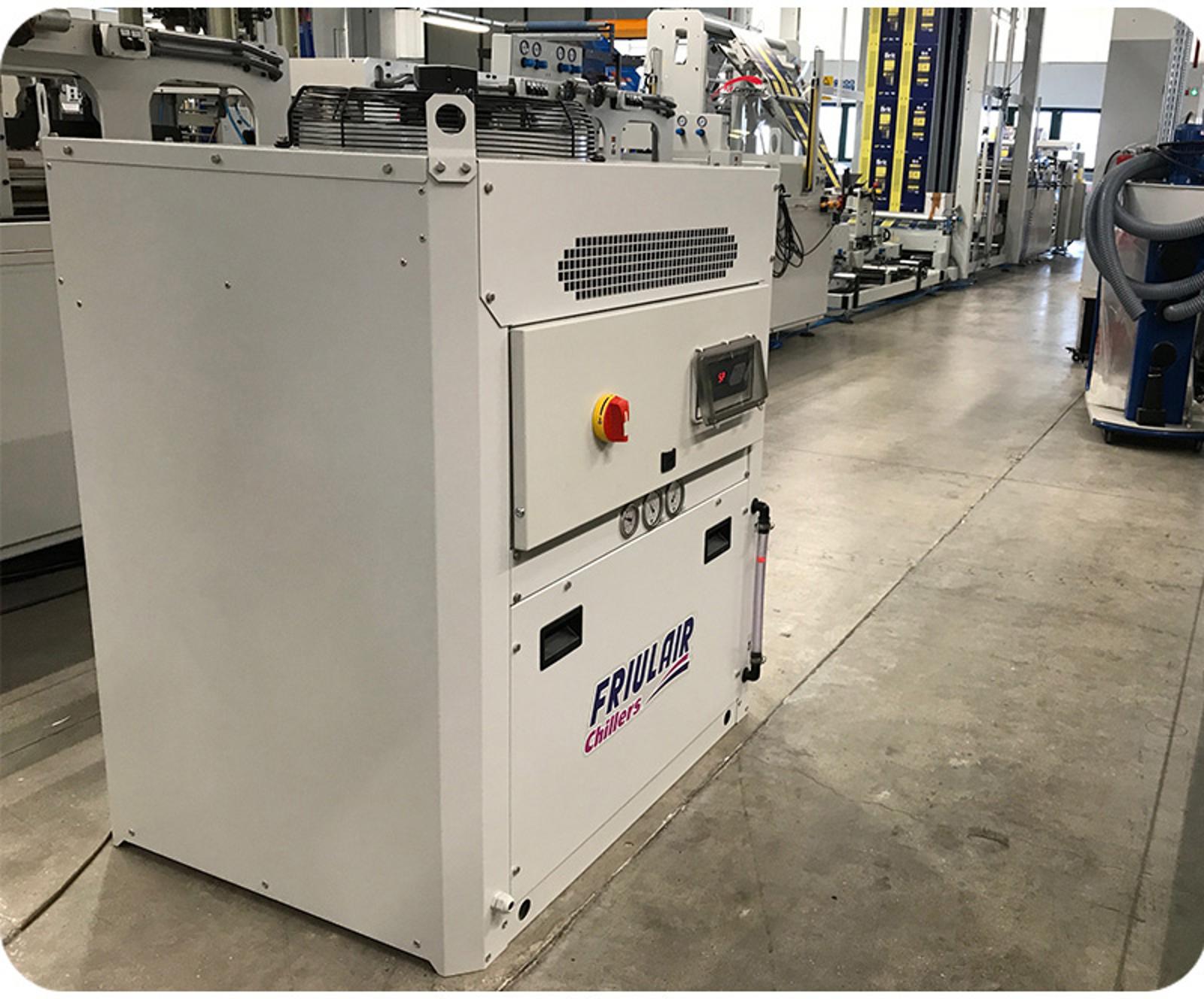
Friulair process chiller installed next to an injection molding line for precise mold cooling.
Separation

How to Select the Best Chiller for Plastic Manufacturing

Critical Data To Prepare

To ensure accurate sizing, processors should prepare:

  • Mold inlet/outlet temperature
  • Required flow and ΔT
  • Resin type and cycle behavior
  • Machine tonnage
  • Ambient conditions
  • Duty cycle and operating hours
  • Redundancy requirements

Future‑Proofing Your Cooling System

Manufacturers should consider future growth, machine upgrades, and potential expansions. Modular architectures and multi-chiller systems allow scalable performance.

Compliance & Site Constraints

Heat load, footprint, installation location (indoor/outdoor), noise limits, and water quality all influence the final cooling solution. Friulair provides engineering guidance to align cooling systems with each plant’s unique requirements.

From Sizing To Service: Friulair’s End-To-End Support

Engineering & Selection Tools

Friulair supports system design with advanced selection software and detailed technical documentation. This ensures each unit is sized precisely to real-world operating conditions.

Installation, Start‑Up & Training

Teams benefit from expert guidance during installation and commissioning, ensuring optimal configuration and long-term reliability.

Global After‑Sales Network

Friulair delivers rapid, effective service worldwide through an international network, offering:

  • Preventive maintenance
  • Original spare parts
  • Technical assistance
  • Training programs

This ensures maximum uptime and long lifecycle performance.

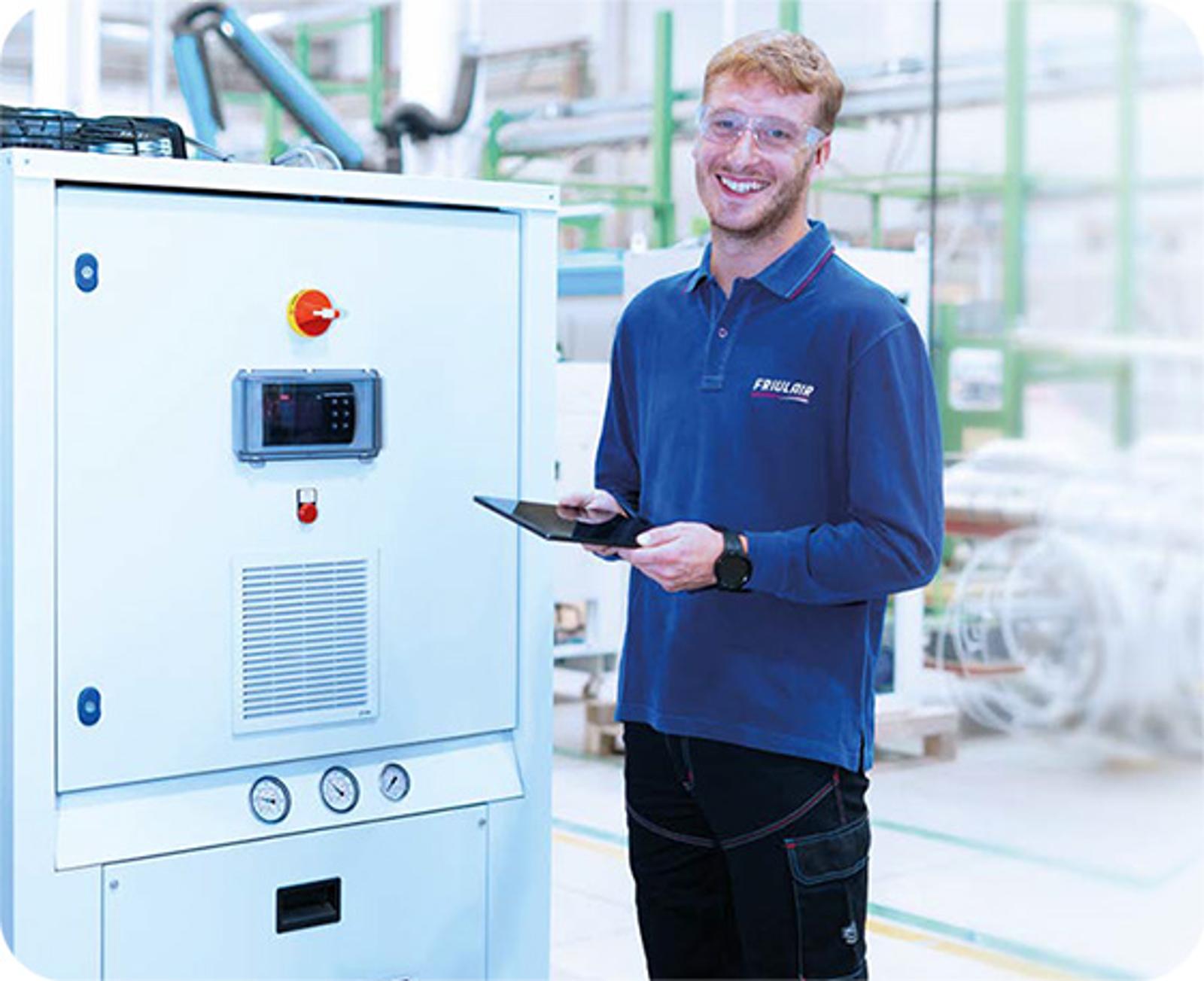
Friulair technician performing service on an industrial biogas chiller

FAQ — Process Chillers For Plastics

Thermochillers like Friulair TGR are ideal because they provide precise mold temperature control, fast response to load variations, and efficient operation with single- or dual-zone configurations.