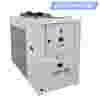
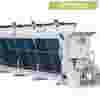
Biogas plants operate continuously under fluctuating loads and demanding environmental conditions. Even though cooling is not part of biogas generation, it significantly influences the stability and efficiency of every downstream process stage.
Moisture & H₂S Management
Biogas contains moisture and hydrogen sulfide. Without controlled cooling, these condense unpredictably into corrosive liquids that damage pipes, compressor internals, and downstream components. Precise cooling stabilizes dew points, producing a cleaner, more stable gas stream that protects equipment across the process chain.
Compressor & CHP Temperature Stability
Compressors face irregular inlet temperatures, ambient swings, and load fluctuations. Overheating leads to frequent alarms, reduced efficiency, and premature wear. CHP engines also depend on consistent inlet gas temperature to maintain stable combustion and electrical output. Even small deviations compromise efficiency and increase component stress.
Upgrading Units: Temperature Sensitivity
Membrane, PSA, and absorption systems operate efficiently only within tight temperature ranges. When cooling drifts, operators see increased fouling, higher pressure drops, and fluctuating biomethane purity. Robust cooling maintains separation performance, reduces cleaning cycles, and protects expensive upgrading components.