
Compressed Air Dryer Selection and Sizing Guide

Choosing the right Compressed Air Dryer is essential to ensure reliable operation, protect equipment and achieve the required air quality for your industrial process.

Different applications require different levels of air dryness, and selecting the wrong solution can lead to inefficiencies, higher operating costs and potential system failures.

This guide helps you understand how to select and correctly size a Compressed Air Dryer based on your operating conditions, required air quality and application requirements.

It covers both the selection of the most suitable technology – from Refrigerated Air Dryers to Adsorption Air Dryer systems – and the key parameters needed to ensure proper system sizing and performance.


 

Separation

Why Compressed Air Drying Matters

Compressed air naturally contains moisture that condenses during compression and cooling. If not properly removed, this moisture can cause:

  • Corrosion in pipelines and equipment
  • Damage to pneumatic components
  • Product contamination
  • Increased maintenance and downtime

Installing the right Compressed Air Dryer ensures stable performance, longer equipment life and consistent air quality.

→ Explore Friulair Compressed Air Dryer solutions

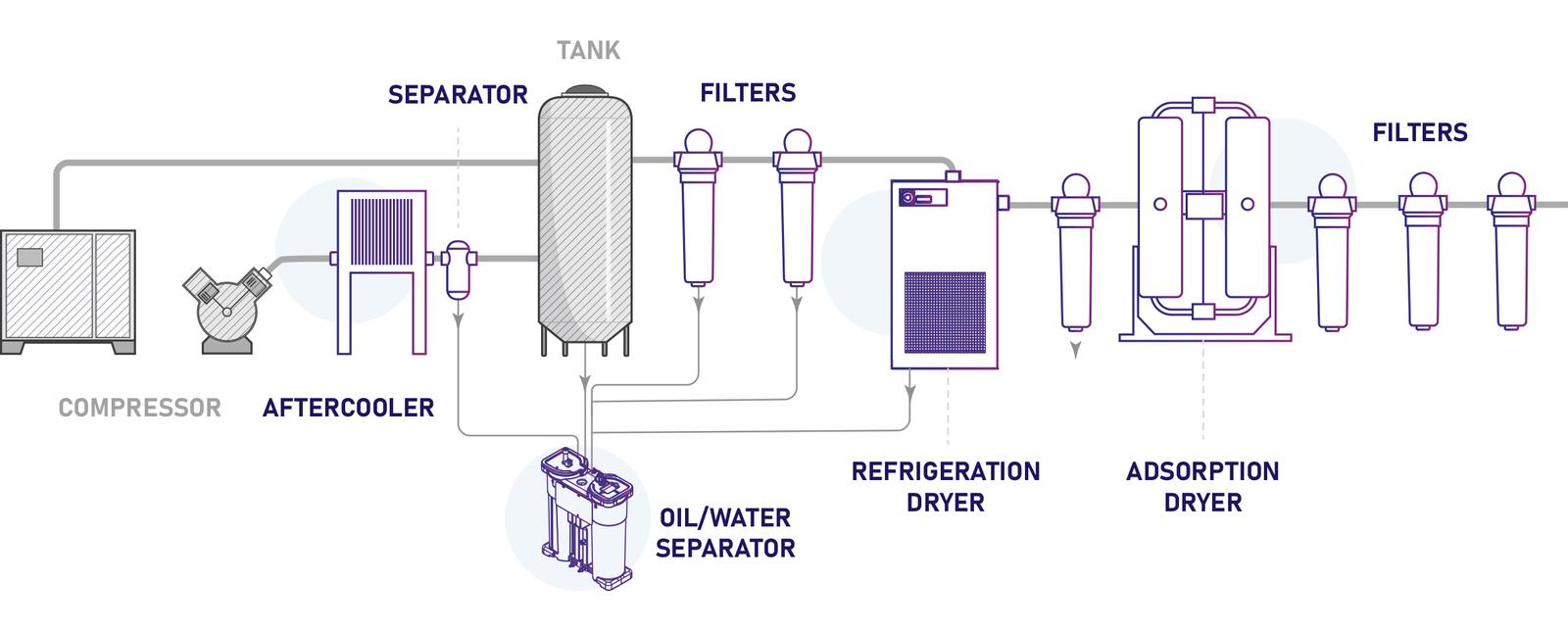
Diagram showing compressed air process from ambient air to application, including compression, moisture formation and drying stages

Key Criteria for Selecting a Compressed Air Dryer

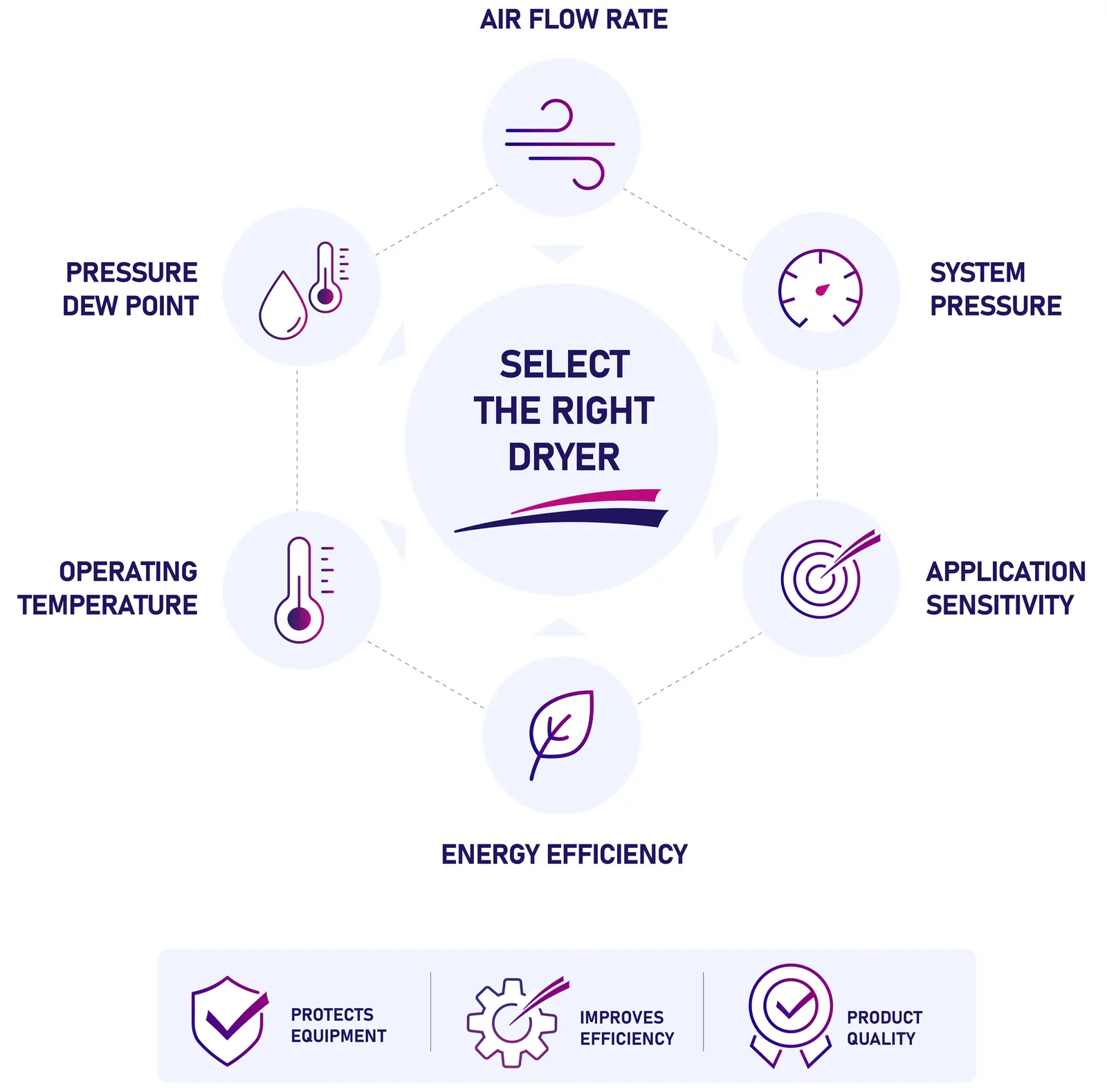
Choosing the right solution depends on several technical and operational parameters:

  • Required pressure dew point
  • Ambient and operating temperature
  • Air flow rate
  • System pressure
  • Application sensitivity
  • Energy efficiency requirements

Understanding these parameters is essential to determine whether a Refrigerated Air Dryer or an Adsorption Air Dryer is the most suitable option.

Key parameters for selecting a compressed air dryer including flow rate, pressure dew point, system pressure, temperature and application requirements

Technical Selection Framework for Compressed Air Dryers

The first and most critical parameter is the required pressure dew point, which directly determines the type of dryer:

  • Applications with standard requirements → Refrigerated Air Dryers (≈ +3°C)
  • Applications requiring high air purity → Adsorption Air Dryer systems (‑40°C or lower)

Air quality requirements vary significantly depending on the application.

→ Explore air quality requirements by application  


Separation

Common Mistakes to Avoid When Selecting Compressed Air Dryers

When selecting a Compressed Air Dryer, avoid:

  • Oversizing the dryer (higher costs and inefficiency)
  • Undersizing the system (insufficient performance)
  • Ignoring dew point requirements
  • Not considering environmental conditions
  • Overlooking maintenance and lifecycle costs

Frequently Asked Questions

The required pressure dew point depends on the application and the level of air dryness needed. General industrial processes typically require a dew point of around +3°C, which can be achieved with Refrigerated Air Dryers.

More sensitive applications, such as food processing or electronics manufacturing, require significantly lower dew points (typically -40°C or lower), making an Adsorption Air Dryer the appropriate choice.

Separation

Ready to choose the right compressed air dryer?

Friulair specialists are ready to help you select the most efficient Compressed Air Dryer, including Refrigerated Air Dryers and Adsorption Air Dryer systems, tailored to your specific requirements.