Industrial Chillers for Process Cooling
Industrial chillers remove excess process heat to support stable production, consistent quality and reliable equipment operation. This article introduces the working principle of process cooling, its main industrial applications and the essential factors to consider when evaluating a chiller.
Temperature control plays a critical role in many industrial processes. Manufacturing equipment, production lines and process fluids can generate significant amounts of heat, which must be removed to maintain stable operating conditions.
An industrial chiller provides a continuous supply of temperature-controlled fluid, helping manufacturers protect equipment, maintain product consistency and support reliable production.
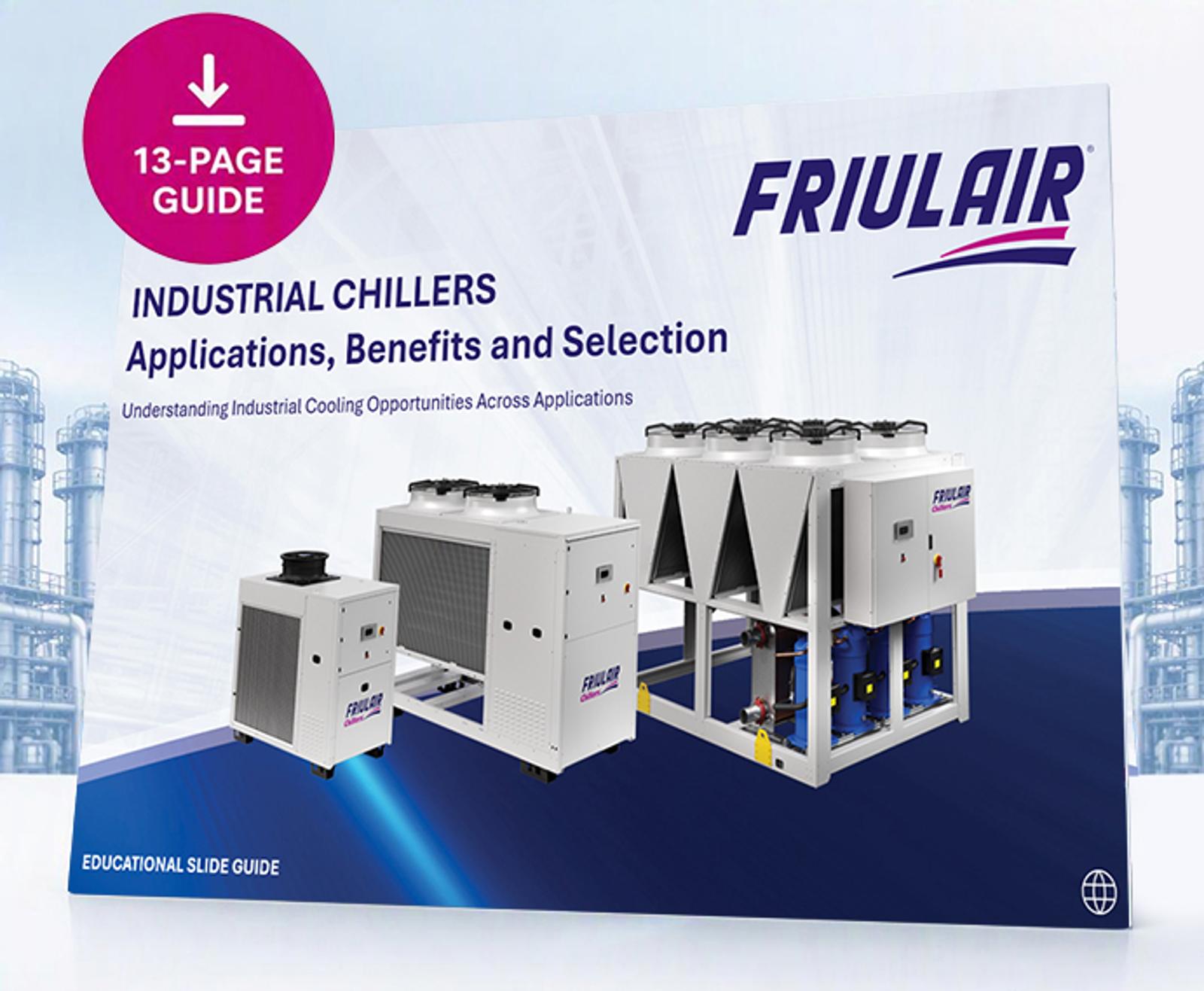
Looking for a practical overview of industrial process cooling? Download the complete Industrial Process Cooling Guide to explore key applications, operational benefits and the essential data needed for chiller selection.
What Is an Industrial Chiller?
An industrial chiller is a heat-transfer system designed to remove unwanted heat from machinery, equipment or production processes.
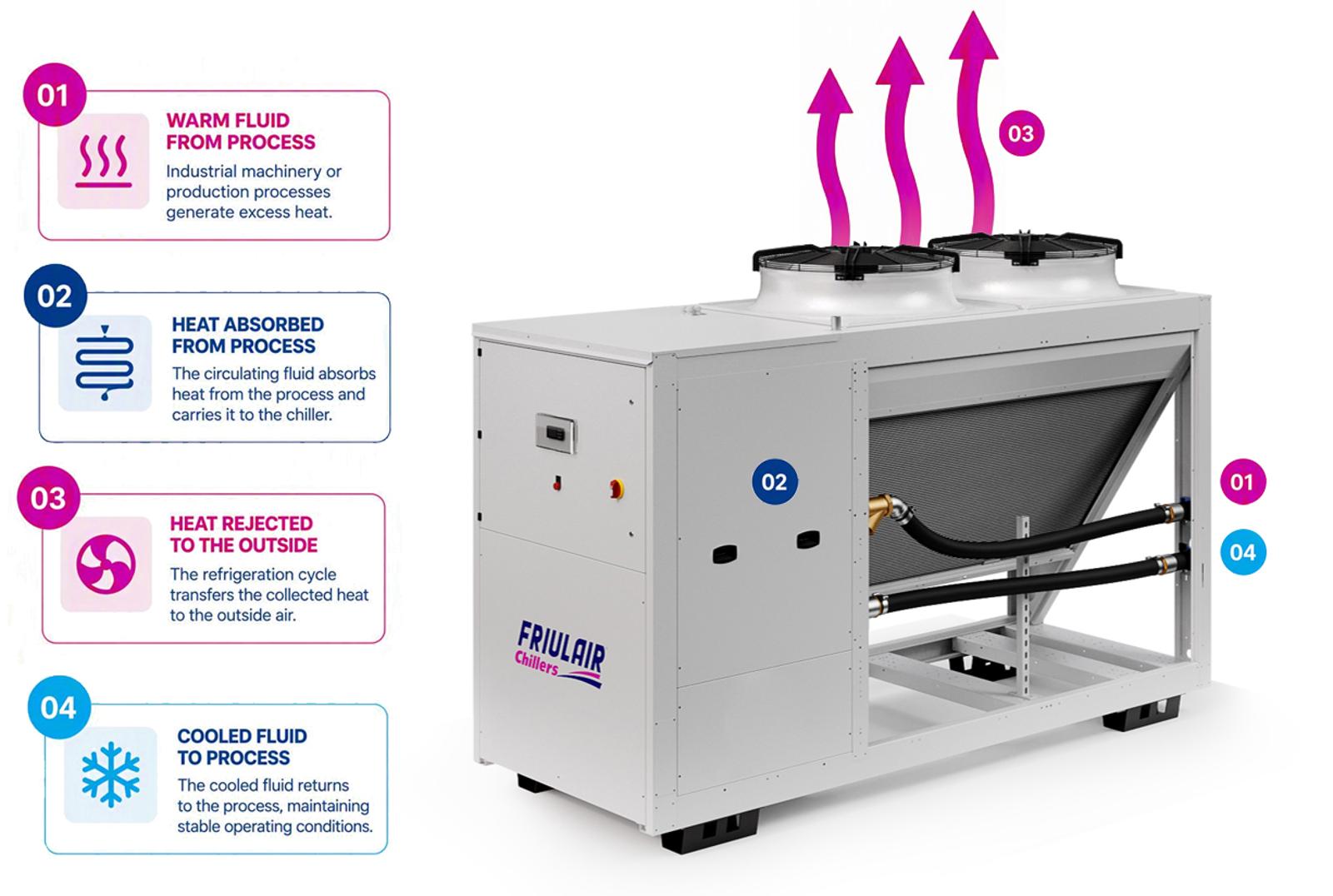
A temperature-controlled fluid, typically water or a water-glycol mixture, circulates between the chiller and the application. As the fluid passes through the process, it absorbs heat and returns to the chiller at a higher temperature.
Inside the chiller, the refrigeration circuit removes the collected heat and releases it to the surrounding environment. The cooled fluid is then returned to the process, creating a continuous closed-loop cooling cycle.
This allows the process temperature to remain stable even when operating conditions, thermal loads or ambient temperatures change.

Why Do Industrial Processes Need Dedicated Cooling?
Comfort cooling and process cooling may use similar refrigeration principles, but they serve different purposes.
HVAC cooling is primarily designed to maintain comfortable conditions for people inside buildings. Its demand is typically influenced by weather, occupancy and seasonal conditions.
Process cooling is designed around the requirements of machinery, products and manufacturing operations. Depending on the application, it may need to operate continuously throughout the year, respond to changing thermal loads and maintain application-specific temperature setpoints.
Accurate and reliable process cooling can help:
- maintain stable and repeatable production conditions;
- reduce temperature-related variation in product quality;
- protect machinery and sensitive components from overheating;
- reduce the risk of interruptions, rejects and unplanned downtime.
An interruption in comfort cooling may affect indoor conditions. An interruption in process cooling can affect product quality, equipment performance or production continuity.
Where Is Industrial Process Cooling Used?
Industrial process cooling is used across a wide range of manufacturing and process applications.
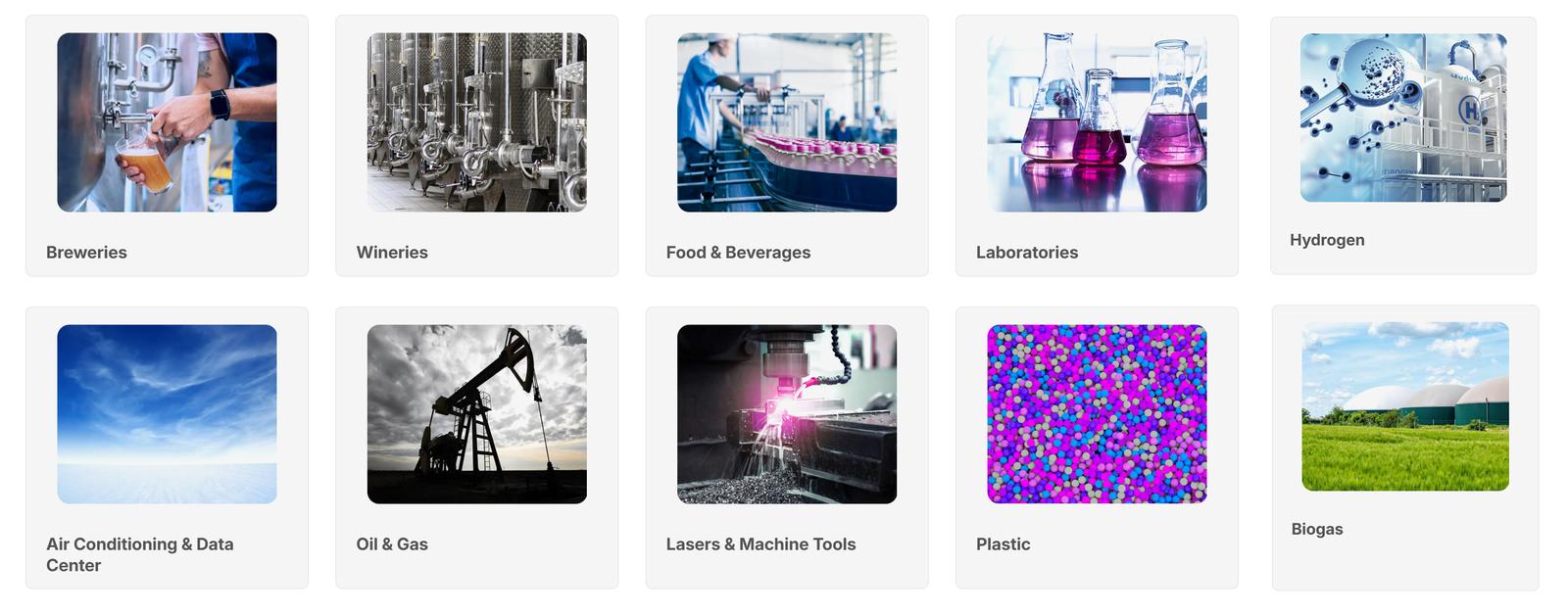
In plastics manufacturing, chillers help regulate mould and machinery temperatures during injection moulding and extrusion, supporting consistent production and controlled cycle times.
In laser cutting and machine-tool applications, stable cooling helps protect laser sources, optics, spindles and electronic components while supporting machining accuracy.
Compressed-air systems generate considerable heat during compression. Chilled fluid can be supplied to compressor heat exchangers and associated equipment to maintain controlled operating temperatures.
In food and beverage production, process cooling can support processing, rapid cooling, packaging and storage. Breweries and wineries also rely on temperature control during fermentation and storage.
Laboratories and pharmaceutical facilities may require stable thermal conditions for testing, manufacturing, sensitive samples and controlled storage.
Cooling is also important in hydrogen, biogas and Oil & Gas applications, where temperature management can support process stability, moisture control, equipment protection and continuous operation.
What Should Be Considered When Selecting a Chiller?
Cooling capacity is an important starting point, but it is not sufficient on its own to select the right industrial chiller.
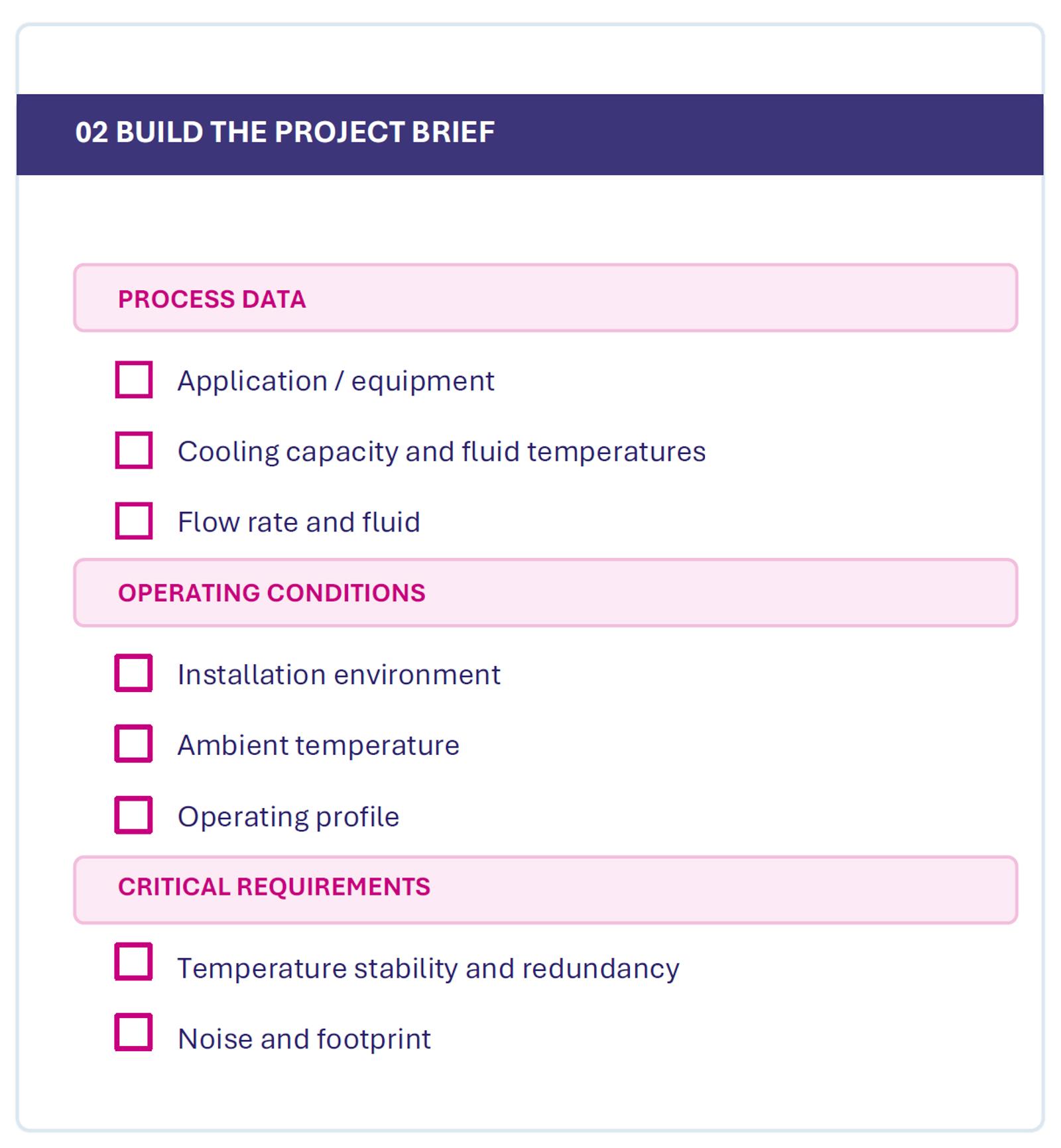
A reliable evaluation must consider the actual application and operating conditions, including:
- the equipment or process to be cooled;
- required supply and return fluid temperatures;
- flow rate and fluid type;
- maximum ambient temperature;
- indoor or outdoor installation;
- continuous, variable or peak load;
- temperature stability requirements;
- available installation space;
- noise, redundancy or other application-specific constraints.
Collecting accurate operating data helps establish a more reliable basis for product selection and technical validation.
Explore the Complete Process Cooling Guide
Would you like to explore industrial process cooling in more detail?
Download the Industrial Process Cooling Guide for a practical overview of applications, operational benefits, cooling-requirement qualification and chiller selection.