
Different Thermal Requirements. One Dedicated Cooling Solution.
Laser sources, optics and auxiliary systems have different thermal requirements. Dedicated process cooling manages these differences more effectively than a uniform approach, helping protect cutting quality and reliable machine operation.
Laser cutting may appear to represent a single cooling application. In reality, the laser source, optics and auxiliary systems generate heat and respond to temperature changes in different ways.
Managing these requirements effectively involves more than selecting sufficient nominal cooling capacity. It requires a dedicated process cooling solution designed around the laser cutting application.
Drawing on its experience in industrial process cooling, Friulair develops solutions that address these different thermal requirements as part of a coordinated cooling architecture.
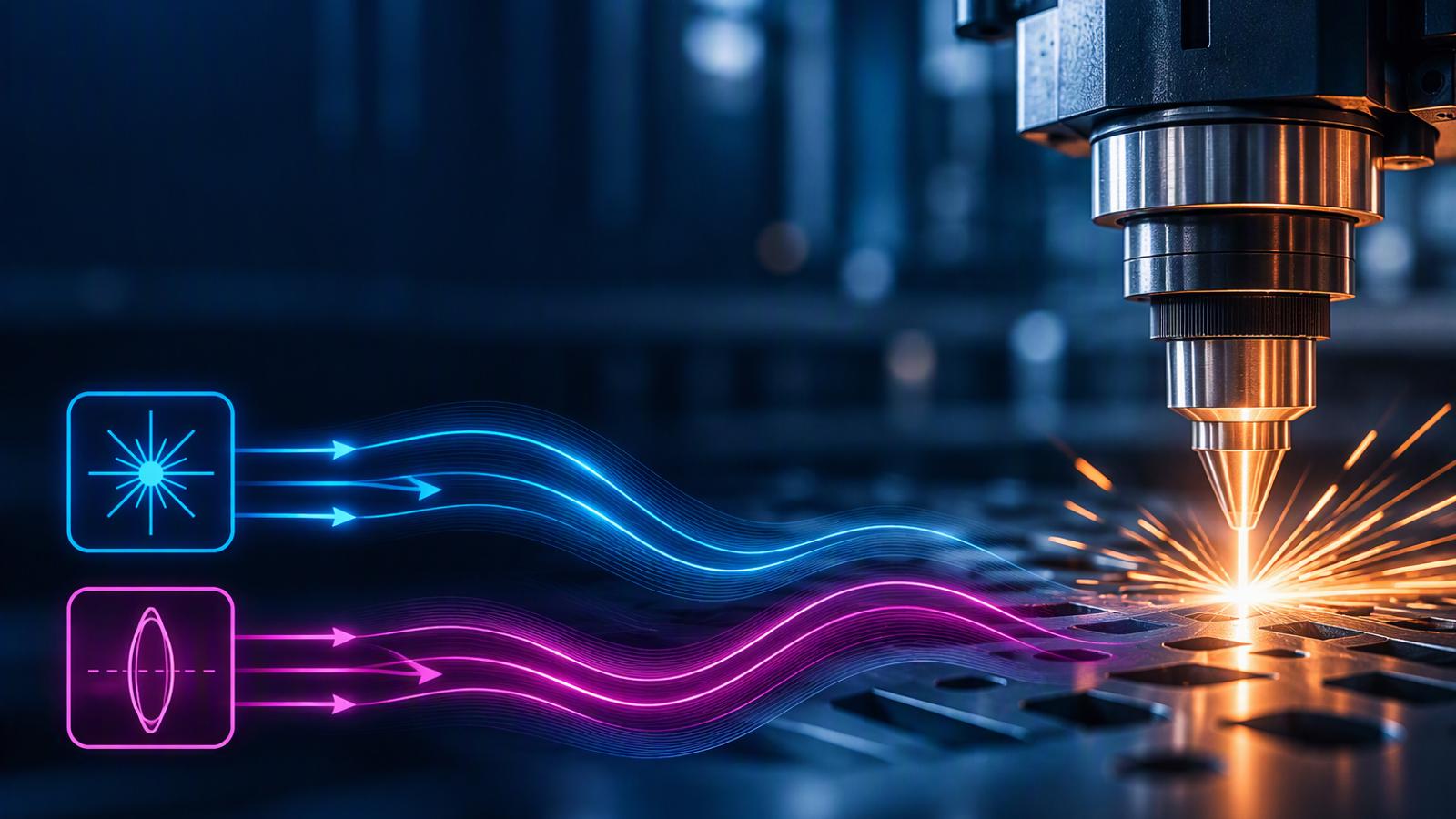
Why do laser components have different thermal requirements?
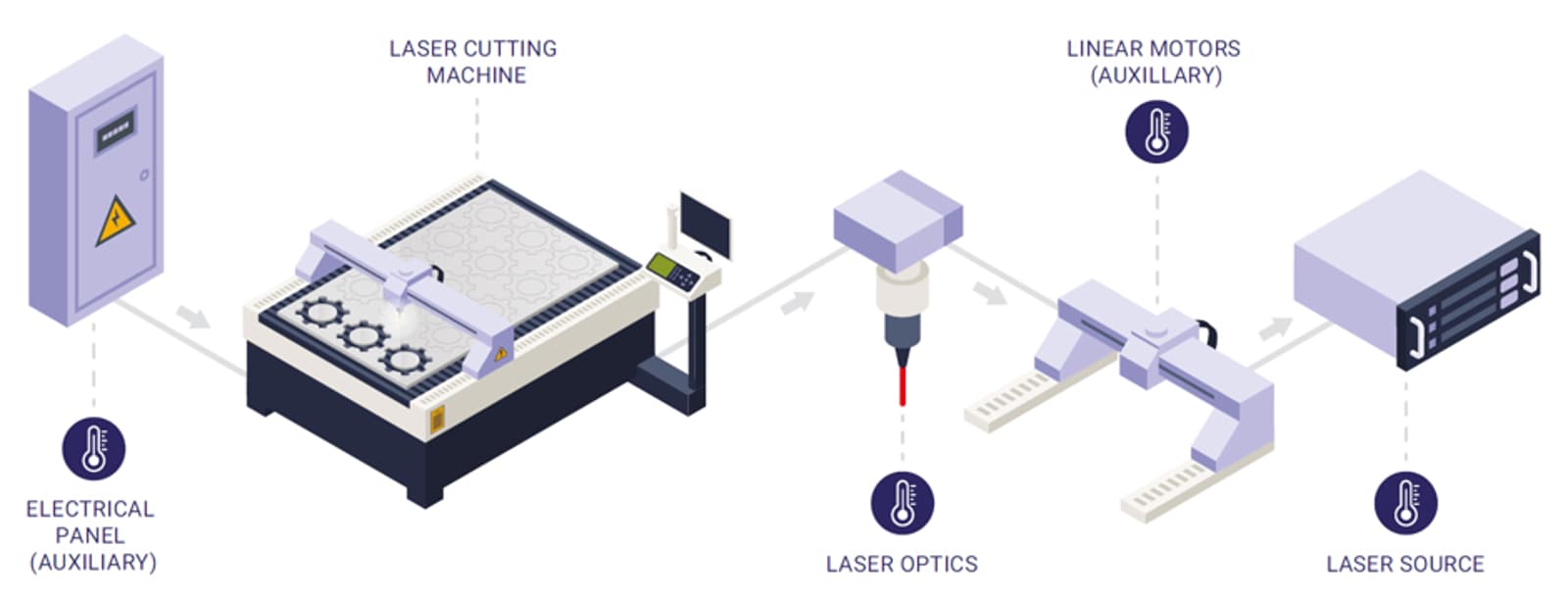
The main components of a laser cutting machine perform different functions and operate under different conditions. As a result, each component presents a specific thermal behaviour.
The laser source generates a variable thermal load that changes according to power levels and operating cycles. The cooling system must respond to these variations while maintaining the operating conditions required by the source.
The optics and cutting head face more rapid and irregular load variations. Sensitive optical components must also remain within controlled temperature conditions to reduce condensation risks and preserve focal stability.
Auxiliary systems, including electrical components and linear motors, may require stable cooling to support the mechanical accuracy and reliable operation of the complete machine.
Although these components belong to the same laser system, they do not necessarily require the same thermal response.
Why is cooling capacity only part of the picture?
Cooling capacity is an essential selection parameter, but it represents only the total quantity of heat the system can remove under specified conditions.
An effective laser cutting cooling solution must also account for:
- the operating temperature required by each component;
- different water flow and pressure requirements;
- rapid variations in laser power;
- condensation risk around sensitive optics;
- continuous operation over extended production cycles.
A chiller may offer sufficient nominal capacity while still being unable to meet the hydraulic or temperature-control requirements of the application.
The objective is therefore not simply to remove heat. It is to provide the right thermal response, in the right part of the machine, at the right time.

Managing laser source and optics independently
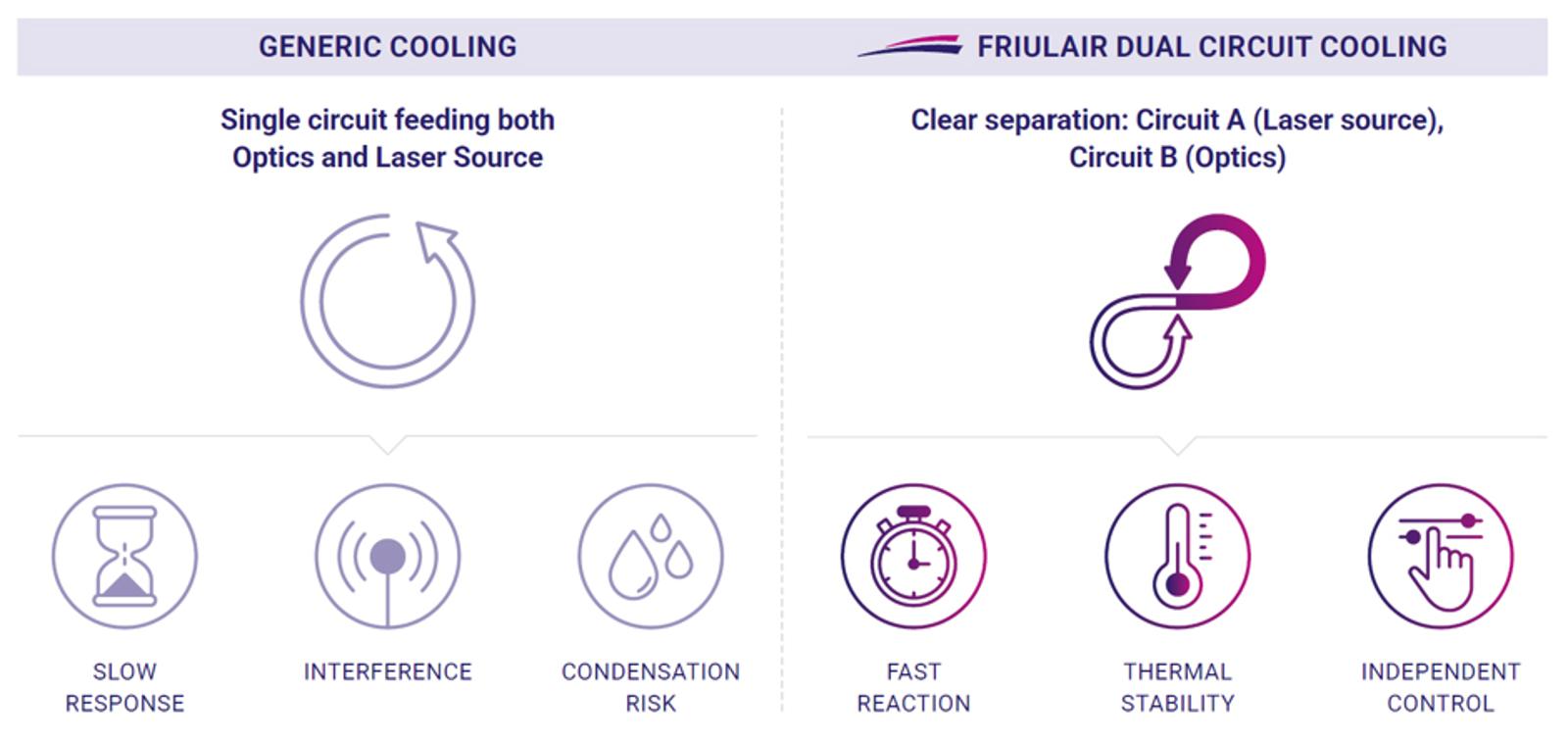
Dedicated thermal management allows the laser source and optics to be controlled according to their respective requirements.
Independent thermal control helps prevent variations affecting one component from interfering with another. The cooling system can respond more effectively when laser power and operating conditions change, while maintaining the temperature required by each part of the machine.
This approach can support:
- consistent cutting quality;
- protection of sensitive optical components;
- fewer thermal interruptions and recalibrations;
- more predictable machine operation;
- reliable performance during extended production cycles.
Cooling therefore becomes an integral part of the laser application, rather than a generic utility selected only according to total capacity.
Choosing cooling around the application
Modern laser cutting systems require cooling solutions developed around their actual operating conditions.
Machine manufacturers and integrators should consider the requirements of the laser source, optics and auxiliary systems when defining:
- cooling architecture;
- temperature setpoints;
- hydraulic characteristics;
- control and communication requirements;
- installation conditions;
- maintenance accessibility.
Addressing these elements early can support more effective integration, smoother commissioning and reliable long-term operation.
As laser power and production demands continue to increase, a dedicated approach to process cooling becomes increasingly important.
Explore Friulair solutions and expertise
Friulair has developed two complementary resources for laser-machine manufacturers, integrators and industrial operators.
Looking for a practical solution overview?
Discover the industrial process chillers developed specifically for laser cutting applications and learn how dedicated cooling can support stable processes, consistent quality and reliable operation. Friulair’s application brochure covers the requirements of laser sources, optics and auxiliary systems, as well as independent thermal control and continuous industrial operation.

The right thermal control strategy can help protect cutting quality, improve repeatability and maintain reliable machine performance over time.